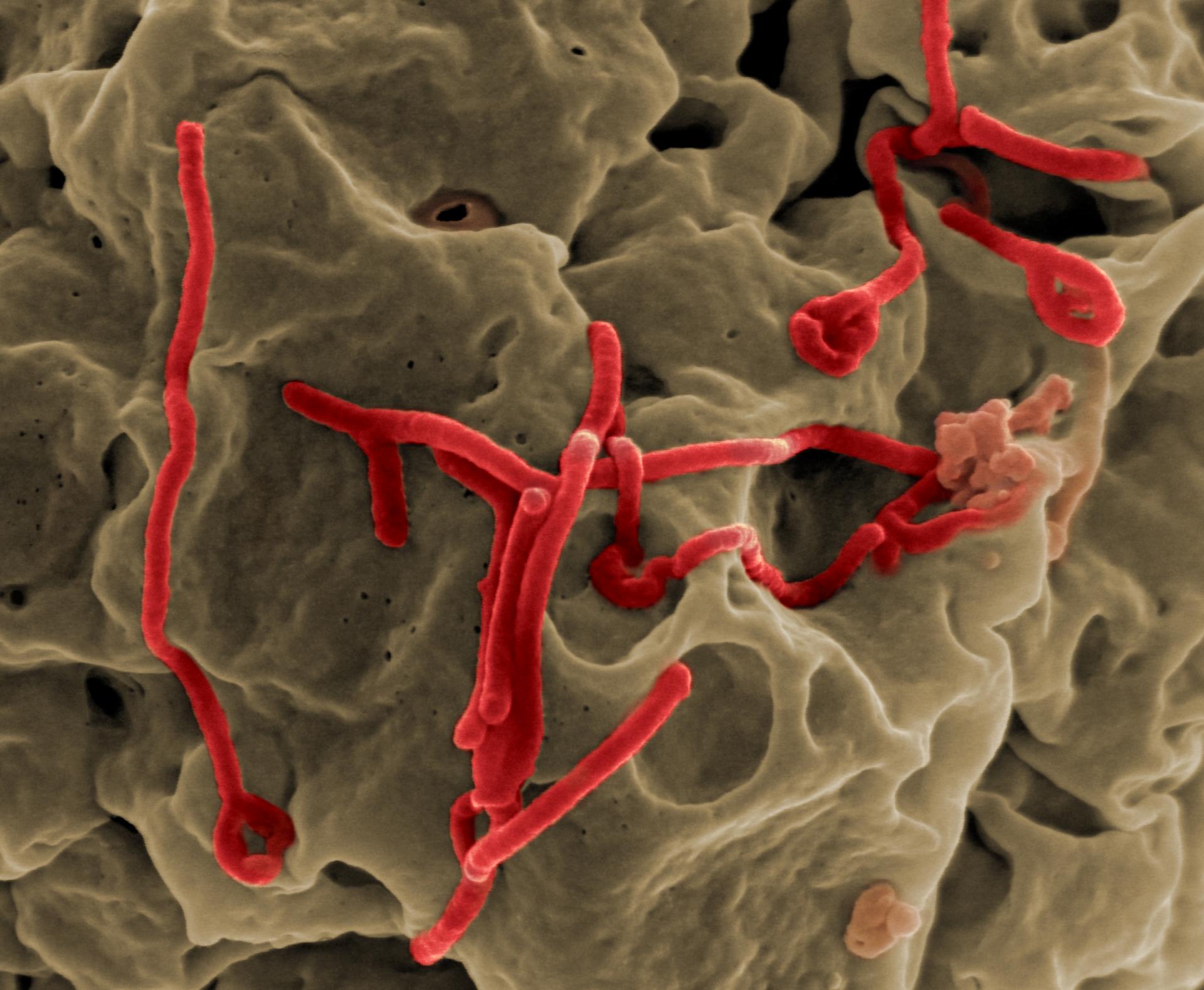
Ebola Outbreak Spreads in Eastern Congo with Travel Restrictions
CDC and DHS expanded Ebola travel restrictions on May 22-24, 2026, banning entry for lawful permanent residents from DRC, Uganda, and South Sudan, with an American doctor evacuated to Germany as the first U.S. Ebola case confirmed.
Objective Facts
On May 18, 2026, CDC and DHS announced enhanced travel screening, entry restrictions, and public health measures to prevent Ebola virus disease from entering the United States. As of May 19, 2026, DRC's Health Ministry reported at least 500 suspected cases and 131 deaths. On May 16, 2026, the World Health Organization declared the new Ebola outbreak in DRC a Public Health Emergency of International Concern, triggered by an outbreak of Bundibugyo virus disease in eastern DRC's Ituri Province. A new rule published May 22, 2026, extends the Title 42 Ebola travel ban to lawful permanent residents who have recently traveled to the Democratic Republic of Congo, Uganda, or South Sudan. All U.S.-bound Americans and lawful permanent residents from DRC, Uganda, or South Sudan within 21 days of arrival must only enter through Washington Dulles International Airport for enhanced screening. Regional outlets emphasize the severe impact of cross-border restrictions, with Uganda implementing its own border surveillance and screening measures.
Left-Leaning Perspective
Left-leaning public health experts and advocacy organizations have mounted sharp criticism of the Trump administration's invocation of Title 42 for Ebola travel restrictions. Medical expert Celine Gounder argued the CDC order itself acknowledges that asymptomatic cases cannot transmit Ebola, undermining the rationale for banning non-citizens while exempting U.S. citizens. Physicians for Human Rights called the policy "xenophobia masquerading as public health." The Infectious Diseases Society of America, led by CEO Jeanne Marrazzo, issued a statement warning that "public health policies that single out non-U.S. citizens won't prevent viruses from crossing our borders. Diseases don't recognize passports." Infectious diseases specialist Krutika Kuppalli, who has worked in Ebola outbreaks and formerly with the WHO, emphasized that "broad travel bans do little to stop the spread of disease once an outbreak is already underway" and that these policies "can actually make outbreaks harder to control by disrupting movement of health care workers and supplies." Progressive commentators and relief organizations have highlighted a broader concern: with the Trump administration having dismantled USAID and slashed CDC global health efforts, the U.S. response prioritizes homeland protection over international containment. Jeremy Konyndyk of Refugees International criticized Secretary of State Marco Rubio's emphasis on keeping Ebola out of the U.S. as "insanely counterproductive," arguing it sends the wrong message to American health workers deployed overseas. Left-leaning coverage emphasizes the contradiction between a low public health risk to the U.S. and draconian restrictions that experts say won't work. Progressives note that previous Ebola outbreaks in 2014-2016 and 2018-2020 were managed without travel bans, using screening and contact tracing instead. They criticize the expansion to include green card holders—changed just four days after initial implementation—as evidence the policy is immigration-focused rather than epidemiologically justified.
Right-Leaning Perspective
Right-leaning officials and Trump administration representatives defend the travel restrictions as necessary precautions to protect American lives. Secretary of State Marco Rubio has been the primary public voice for this position, stating repeatedly that the administration's top priority is ensuring Ebola does not reach the United States, framing this as a core responsibility. Rubio articulated a two-part strategy: first, ensure the virus doesn't enter the U.S. through travel restrictions; second, provide assistance to affected countries. He pointed to practical measures like rerouting flights to concentrated screening airports and emphasized that the U.S. is funding up to 50 response clinics in affected regions. Conservative officials justify the restrictions by citing the absence of a vaccine or specific treatment for the Bundibugyo strain, the virus's high fatality rate (25-50 percent), and the logistical challenge of detecting asymptomatic travelers during the 21-day incubation period. The Trump administration has also criticized the World Health Organization for being slow to respond to the outbreak and for its previous failures during COVID-19. The rationale centers on the principle that protecting the homeland must be the first priority, with travel restrictions serving as a critical defensive tool. The expansion to include green card holders on May 22 was justified as necessary given escalating case counts and resource constraints. Right-leaning coverage emphasizes that this is the first time the U.S. has imposed an Ebola travel ban and frames it as an appropriate response to an extraordinary threat. Conservative supporters argue that border control during public health emergencies is standard practice and that the administration's dual approach—restricting entry while funding international response—balances security and humanitarian concerns.
Deep Dive
The Ebola travel restrictions announced May 18-24, 2026, represent a significant departure from how the U.S. managed previous Ebola outbreaks. During the 2014-2016 West Africa epidemic and the 2018-2019 Kivu outbreak, the CDC explicitly opposed travel bans, instead implementing enhanced screening, exit screening from affected countries, and contact tracing. The Trump administration's invocation of Title 42—a public health authority unused for decades until COVID-19—marks the first time the U.S. has imposed a travel ban in response to Ebola. The announcement came as the outbreak expanded rapidly from an initially misidentified strain: health authorities initially tested for the common Zaire strain before identifying the rare Bundibugyo variant on May 15. Both perspectives contain legitimate points. Public health experts are correct that travel bans typically fail to stop disease transmission because determined travelers find alternate routes, and restrictions do impede the movement of humanitarian workers and medical supplies that containment efforts depend on. However, the Trump administration's security-focused position reflects genuine epidemiological challenges: the 21-day incubation period means asymptomatic travelers could arrive before showing symptoms, the Bundibugyo strain lacks approved vaccines or treatments, and the region's porous borders and ongoing armed conflict complicate containment at the source. The core disagreement is philosophical: whether the U.S. should prioritize preventing all possible importation (security-first approach) or maximizing global containment capacity (containment-first approach), with the latter accepting higher residual risk in exchange for better outcomes overall. Unresolved questions include: why the policy exempts U.S. citizens and green card holders if the epidemiological risk is the same; whether the May 22 expansion to include permanent residents reflects genuine epidemiological changes or marks policy drift toward broader immigration restrictions; and whether the massive cuts to USAID and CDC global programs undermined the kind of international health infrastructure that made previous Ebola responses more effective. Matthew Kavanagh of Georgetown University suggested that U.S. international aid cuts and the Trump administration's withdrawal from WHO have hampered the global health response to Ebola.
Regional Perspective
Regional governments, particularly Uganda, have emphasized cross-border dimensions of the outbreak, implementing COVID-style screening tools and public awareness campaigns at key border crossings and internal roads. Uganda Airlines' temporary suspension of flights to Kinshasa represents one of the most significant aviation responses since Ebola concerns emerged, following confirmation of imported cases of the rare Bundibugyo strain linked directly to the DRC outbreak. Ugandan authorities have activated nationwide preparedness systems under the National Task Force, implementing containment measures across multiple sectors, with particular focus on vulnerable regions, intensifying public sensitization campaigns on Ebola symptoms and hygiene practices, and significantly strengthening health screening capacities at border points. Across the broader region, countries are stepping up surveillance, screening and entry controls in response to developments in eastern Congo, with Zambia—which shares over 1,000 miles of border with Congo—facing a "very high" threat level due to a "very, very porous" border with few formal entry points, where people can simply walk across, and the 21-day Ebola incubation period creates risk of exposed individuals crossing borders before showing symptoms. Regional health officials note that response efforts in Congo are being challenged by insecurity and access constraints that complicate containment and surveillance operations. Regional media differs from Western coverage by emphasizing the interconnectedness of economies and population movements along porous borders, focusing on practical logistical challenges to containment (mining activities, informal trade routes, healthcare worker mobility) rather than abstract policy debates about travel bans. Local reporting highlights that Kampala in Uganda is economically integrated with eastern DRC mining regions, with high levels of people and goods movement creating rapid disease spread risk. Regional outlets prioritize community engagement and local preparedness as critical to outbreak control, rather than focusing on international travel restrictions.