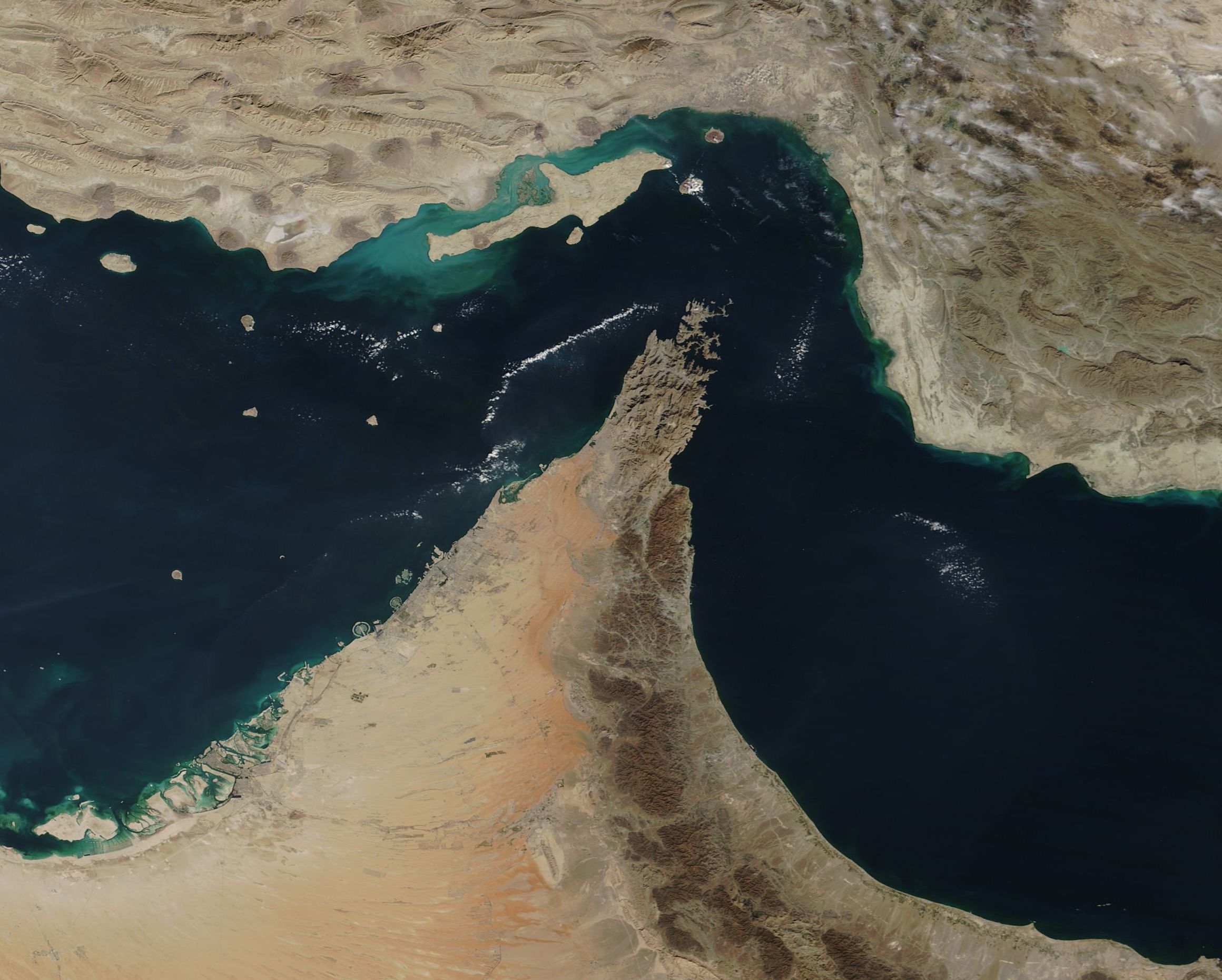
Strait of Hormuz shipping traffic remains below ceasefire pledges
Shipping remains at a standstill in the Strait of Hormuz despite the ceasefire agreement between the United States and Iran, with just four transits recorded in early days despite Trump's demand for "complete, immediate" reopening.
Objective Facts
Less than two hours before his deadline, Trump announced that he would suspend the planned attacks for two weeks, "subject to the Islamic Republic of Iran agreeing to the COMPLETE, IMMEDIATE, and SAFE OPENING of the Strait of Hormuz." However, traffic through the Strait of Hormuz has yet to see a meaningful rebound, with just four transits recorded on Wednesday, according to S&P Global Market Intelligence. On 9 April, there was no sign that a recent agreement to lift the Iranian blockade of Strait of Hormuz was being implemented, with ships once again being prevented from crossing through the strait. Abu Dhabi National Oil Company CEO Sultan Al Jaber said on that day that the strait was still not open, despite the Iran war ceasefire, because Iran is restricting and conditioning traffic. Shipping experts note about 70% of this Middle Eastern oil is delivered to Japan by ships that pass through the Strait of Hormuz, creating acute pressure on Asian economies dependent on Gulf oil.
Left-Leaning Perspective
Major left-leaning outlets have criticized the ceasefire as a strategic failure on Trump's central demand. MSNBC/MaddowBlog writer Steve Benen argued that despite Trump's rhetoric, Iran's control over the Strait of Hormuz is now stronger than at the war's start and posed to generate enormous profits, concluding "To see this as anything but a colossal strategic failure would be a mistake." CNN's Fareed Zakaria framed Iran's strait control as handing Tehran a "weapon" that is "far more usable than nuclear weapons." CNN Politics analysis noted that the ceasefire gave Iran something it never had before the war: control of the Strait of Hormuz, and while Trump announced the ceasefire was conditional on "complete, immediate, and safe opening" of the strait, he notably didn't demand that Iran relinquish control. Progressive critics also emphasized human costs and concessions. Benen noted that the United States has suffered horrible losses, including fallen U.S. service members, a badly tarnished global reputation and tens of billions of tax dollars, on top of the economic and energy sector consequences. House Democratic Leader Hakeem Jeffries called the two-week ceasefire "woefully insufficient," and dozens of Democrats called for the president's Cabinet to invoke the 25th Amendment and remove him from office after he threatened to wipe out a "whole civilization" if Iran did not agree to reopen the Strait of Hormuz. Left-leaning coverage emphasizes that Trump failed to achieve even his own stated objective of ensuring free passage through the strait without Iranian conditions or fees. While Iran's statement said passage "will be possible via coordination with Iran's Armed Forces and with due consideration of technical limitations," and Trump posted Iran's statement to Truth Social, he notably didn't demand that Iran relinquish control.
Right-Leaning Perspective
Conservative voices, including on Fox News, have criticized the ceasefire as failing Trump's own stated conditions about shipping. Fox & Friends co-host Lawrence Jones said Wednesday on the show, "I will say that the president's demands—we have not reached any of those objectives," directly challenging the Trump administration's claims of success. Fox anchor Harris Faulkner characterized it as "the least ceasefire-like ceasefire I think that anybody might have anticipated," while Fox's chief foreign correspondent Trey Yingst said "the Iranians don't appear very serious about this ceasefire agreement." Conservative Iran hawks expressed broader concerns about strategic concessions. Sen. Lindsey Graham of South Carolina, one of the most vocal proponents of the war, posted: "We must remember that the Strait of Hormuz was attacked by Iran after the start of the war, destroying freedom of navigation," and "Going forward, it is imperative Iran is not rewarded for this hostile act against the world." Graham argued that Congress, which hasn't authorized the war, must vote on any deals to end it, comparing it to congressional approval of former President Barack Obama's nuclear deal with Iran. Right-wing coverage emphasizes Iran's continuing control and the failure to achieve clean reopening. Trump himself accused Iran of failing to honor the deal, saying "Iran is doing a very poor job, dishonorable some would say, of allowing Oil to go through the Strait of Hormuz." By Wednesday, Iranian state media said it had closed Hormuz again, citing the Israeli attacks on Lebanon.
Deep Dive
Trump announced the ceasefire on April 8, 2026, making reopening the Strait of Hormuz a core condition—describing it in absolutist terms as "COMPLETE, IMMEDIATE, and SAFE OPENING." The closure had been caused by Iran's response to the U.S.-Israel war that killed Iranian Supreme Leader Ali Khamenei on February 28, 2026, when Iran launched missile and drone attacks in retaliation and the IRGC issued warnings forbidding passage, launched 21 confirmed attacks on merchant ships, and reportedly laid sea mines. Both sides of the political spectrum share agreement on the basic facts: shipping traffic has not resumed meaningfully. Traffic through the Strait of Hormuz has yet to see a meaningful rebound, with just four transits recorded on Wednesday, according to S&P Global Market Intelligence. The disagreement centers on interpretation and blame. Trump administration officials, particularly National Economic Council Director Kevin Hassett, minimized the significance of minimal traffic, arguing even one tanker represents substantial value. Meanwhile, both left-wing critics and right-wing skeptics pointed out the massive gap between Trump's demand for "complete, immediate" reopening and Iran's conditional language requiring "coordination with Iran's Armed Forces." The critical unresolved question is whether Trump accepted—or failed to negotiate away—Iran's newfound leverage over global shipping. One of the most striking aspects of the ceasefire was that it seemed to give Iran something it never had before the war: control of the Strait of Hormuz, and as CNN's Fareed Zakaria noted, that would be a very big deal. Negotiations resume this weekend in Islamabad, Pakistan, where the U.S. will attempt to clarify and enforce the strait reopening clause while Iran uses it as leverage for broader concessions including sanctions relief and recognition of uranium enrichment rights.
Regional Perspective
About 70% of Japan's Middle Eastern oil is delivered by ships that pass through the Strait of Hormuz. Despite the ceasefire announcement on April 8, Japan faces continued disruption of critical energy supplies due to Iran's continued control. Japanese refiners have requested government release of stockpiled oil to bridge the supply gap, indicating serious regional concern that the ceasefire pledge is not being honored in practice. Abu Dhabi National Oil Company CEO Sultan Al Jaber said the strait was still not open, despite the Iran war ceasefire, because Iran is restricting and conditioning traffic. He added that 230 loaded oil tankers are waiting inside the Gulf. Al Jaber stated in a social media post Thursday: "the Strait of Hormuz is not open. Access is being restricted, conditioned and controlled. Iran has made clear – through both its statements and actions – that passage is subject to permission, conditions and political leverage." This regional perspective contradicts Trump administration claims of strait reopening and highlights how Gulf energy producers view Iran's continued blockade control as coercive. Iran's Foreign Minister Abbas Aragchi said Iran would grant safe passage in "coordination with Iran's Armed Forces and with due consideration of technical limitations," language that regional governments interpret as Iran retaining unilateral control and the ability to suspend passage citing security concerns. Iran has insisted that ships wanting to transit the strait must secure its permission and has suggested it retains the right to impose a fee for passage. The Iranian navy released a map late Wednesday indicating it may have mined the strait and outlining the designated shipping lanes vessels should use to transit safely, directing outbound ships along a route just south of Larak Island, while inbound vessels must follow a route north of the island—both closer to Iran's mainland than the route often taken before the war. For Japan and Gulf states, this represents not freedom of navigation but Iranian management of a critical global chokepoint.